
FACULTY
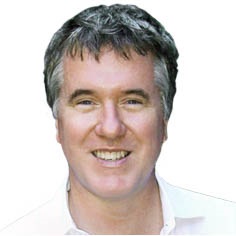

Michael C. Anderson received his Ph.D. in Cognitive Psychology and Cognitive Neuroscience from the University of California, Los Angeles in 1994, under the mentorship of Robert and Elizabeth Bjork. After completing a post-doctoral fellowship in cognitive neuroscience with Art Shimamura at the University of California, Berkeley, he joined the Psychology faculty at the University of Oregon, where he rose to Full Professor of Cognitive Neuroscience. In 2007, Anderson moved the Memory Control Lab to the University of St. Andrews, Scotland, where he accepted a Chair in Cognitive Neuroscience, before finally moving to the MRC Cognition and Brain Sciences Unit in Cambridge, England in the Autumn of 2009. Dr. Anderson has been a visiting scholar in the Department of Psychology at Stanford University with John Gabrieli, is a Fellow of the Association for Psychological Science, and is on the governing board of the Psychonomics Society. Dr. Anderson's research on memory control has been featured in Newsweek, US News and World Report, the New York times, CNN, BBC World News, and the New Scientist (see Media section).
POST-DOCS


VISITING SCIENTISTS
PHD STUDENTS
LAB ALUMNI
| Lab member | Year | Lab position | Current position (2022) |
|---|---|---|---|
Zulkayda Mamat

|
2018-2023 | PhD student | Post-doc |
Frederik Bergmann


|
2018-2023 | PhD student | Professional Research Assistant, Institute of Cognitive Science, University of Colorado Boulder |
Laura C Marsh

|
2018-2023 | PhD student | Trainee Clinical Psychologist, South London and Maudsley NHS Foundation Trust |
|
Ana Maria Frota Lisboa Pereira de Souza
|
2018-2023 | PhD student | Post-doc, School of Life and Medical Sciences, University of Hertfordshire |
|
Davide Nardo
|
2018-2022 | Post-doc | Assistant Professor, Dipartimento di Scienze della Formazione, Università Roma Tre |
|
Anaïs Vandevelde
|
2019-2022 | Visiting student | Psychiatre, Unité Psychiatrie Adulte, Centre Hospitalier Universitaire de Caen |
|
Meera Jakkli
|
2021-2022 | Visiting student | Research Assistant, University of Cambridge |
|
Subbulakshmi Sankarasubramanian
|
2017-2022 | PhD student | Post-doc, Stanford Memory Lab, Stanford Center on Longevity, Stanford University |
|
Dhruv Nandamudi
|
2019-2021 | PhD student | Co-founder & CEO, Dhruva Communications, New Hampshire (US) |
|
Kevin van Schie
|
2019-2021 | Post-doc | Assistant Professor, Tilburg University |
|
Giulia Barsuola
|
2017-2021 | PhD student | Youth worker, The Kite Trust, UK |
|
Dace Apšvalka
|
2017-2021 | Post-doc | Research Associate, University of Cambridge, MRC Cognition and Brain Sciences Unit |
|
Julie Lundsgaard
|
2020-2021 | Visiting student | PhD student, University of Copenhagen |
|
Yingying Wang
|
2018 | Visiting student | Assistant Professor, Department of Psychology and Behavioral Sciences, Zhejiang University |
|
Haakon G. Engen
|
2017-2018 | Post-doc | Researcher, Department of Psychology, University of Oslo |
| Yuhua Guo | 2014-2017 | PhD student | Consultant, Siemens Management Consulting, Beijing |
|
Taylor Schmitz
|
2013-2017 | Post-doc | Adjunct Professor, Principal Investigator, Integrative Neuroscience of Cognition and Aging, Western University |
|
Ana Catarino
|
2013-2016 | Post-doc | Director of Clinical Science, Ieso Digital Health |
|
Jonathan M. Fawcett
|
2012-2016 | Post-doc | Associate Professor, Memorial University |
|
Roland Benoit
|
2010-2013 | Post-doc | Research Group Leader, Adaptive Memory Group, Max Planck Institute for Human Cognitive & Brain Sciences From January 2023: Associate Professor, Department of Psychology and Neuroscience, University of Colorado, Boulder |
|
Maria Wimber
|
2011-2013 | Post-doc | Professor, University of Glasgow |
|
Pierre Gagnepain
|
2010-2013 | Post-doc | Principal investigator, French National Institute of Health and Medical Research |
|
Justin C. Hulbert
|
2005-2012 | PhD student | Associate Professor, Principal Investigator at Memory Dynamics Lab, Bard College |
|
Chelan Huddleston (née Weaver)
|
2007-2012 | PhD student | Curriculum Analyst, UC Berkeley |
| Courtney McCauley Clark | 2008-2009 | Lab manager | Lecturer, UCLA |
|
Kristin Flegal
|
2006-2007 | Research assistant | Lead Scientist, University of Glasgow |
|
Benjamin J. Levy
|
2000-2006 | PhD student |
Associate Professor, University of San Francisco |
| Nathan L. Foster | 2004-2006 | Lab manager | Assistant Professor, The College of Wooster |
| Melissa Magaro | 2002-2004 | Research assistant | Clinical Psychologist, Cognitive Behavior Associates |
| Sarah Johnson | 2001-2004 | Post-doc | Associate Professor, Moravian College |
|
Brice Kuhl
|
2001-2003 | Lab manager | Associate Professor, Principal Investigator at Kuhl Lab, University of Oregon |
| Julia Reinholz | 2002 | Masters student | Post-doc, University of Münster |
| Ted Bell | 1996-2002 | PhD student | Research Associate with Helen Neville, Brain Development Lab, University of Oregon |
| Geeta Shivde | 1996-2001 | PhD student | Professor, West Chester University |
|
Collin Green
|
1998-2000 | Research assistant | Senior User Experience Researcher, Google Inc |
|
Kathleen McCulloch
|
1995-1997 | Research assistant | Researcher and Senior Lecturer, Perception, Cognition and Neuroscience (PCN) Research Group, University of Central Lancashire |
COLLABORATORS
| Jarrod Lewis-Peacock | Department of Psychology, The University of Texas at Austin |
| Lili Sahakyan | Department of Psychology, University of Illinois at Urbana-Champaign |
| Claudius von Schröder | Department of Cognitive Psychology, Universität Hamburg |
| Ahsan Khan | Biomedical Engineering Department, The Chinese University of Hong Kong |
| Bünyamin Emin Palanci | Department for Clinical Psychology and Psychotherapy, Universität des Saarlandes |
| Trevor Robbins | Department of Experimental Psychology, University of Cambridge |
| James Rowe | MRC Cognition and Brain Sciences Unit, University of Cambridge |
| Rik Henson | MRC Cognition and Brain Sciences Unit, University of Cambridge |
| Tim Dalgleish | MRC Cognition and Brain Sciences Unit, University of Cambridge |
| Scott Cairney | Department of Psychology, University of York |
| Helen Barbas | Department of Anatomy and Neurobiology, Boston University |
| Basilis Zikopoulos | Department of Health Sciences, Boston University |
| Davide Nardo | Dipartimento di Scienze della Formazione, Università Roma Tre |
| Ying Ying Wang | Department of Psychology and Behavioral Sciences, Zhejiang University |
| Wenjing Yang | Institute of Psychology, Southwest University in Chongqing, China |
| Xiaoqing Hu | Department of Psychology, The University of Hong Kong |
| Eitan Schechtman | School of Biological Sciences, University of California, Irvine |
| Pedro Bekinschtein | Institute of Cognitive and Translational Neurosciences, Favaloro University and University of Buenos Aires |
| Noelia Weisstaub | Faculty of Exact and Natural Sciences, University of Buenos Aires |